Plymouth Cricket: A Squashed Bug on America’s Windshield

Plymouth Cricket: A Squashed Bug on America’s Windshield

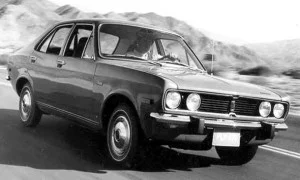
To say that the Plymouth Cricket was a byproduct of Chrysler’s hurried quest to become a multinational corporation is like saying a staph infection is a byproduct of poor hygiene. Possibly thinking that two wrongs might equal a right, Chrysler decided to appropriate the Hillman Avenger sedan from its new portfolio of British crap. They slapped a Plymouth badge on it and, voila, they had a small car for the U.S. at a fraction the cost. 

Read More

Capri: The Sexy European

Capri: The Sexy European

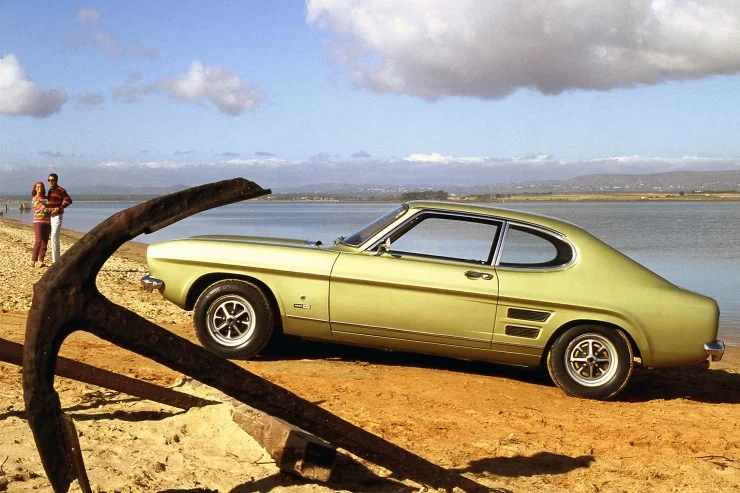
Was the Capri a model or a make? The car that burst on the scene at the start of the 1970s was itself gorgeously self-evident, a lively sport coupe that handled as good as it looked. Capri was a collaboration between the British and German designers of the most globally diverse of all car companies, Ford. Sport sedan aficionados across Europe knew this racy coupe wore the Blue Oval proudly on its bonnet. It was the Ford Capri and they loved it. But when it came to America, Capri’s many fans here were less clear as to what banner this racy little coupe drove for. Was it a Ford? Ford dealers in the States already had a sporty coupe to sell. It was called the Mustang, and as rumor has it, did pretty well. Capris in America were sold through Lincoln-Mercury dealers. But was it a Mercury? No Mercury ever looked or handled like a this. Things didn’t get any clearer over Capri’s two-plus decades in America. It took different forms, spanning four iterations and as many continents. Was it a Ford or a Mercury? We can only call it Capri, the subject of our next Makes that Didn’t Make It.

Read More

The Hummer

The Hummer

Hummer started out as a military vehicle, a larger, more capable replacement for the venerable Army Jeep. After a starring role in the invasion of Saddam Hussien’s Iraq, well-heeled movie stars and hedge fund managers clamored clamored to buy one to show off their macho creed. And so it came to pass that just as the 20th century came to a close, Hummer became General Motor’s eighth brand. Alas, in 2009, the Great Recession would sweep away Hummer even more easily than those military Humvees had help smash the Iraqi army.

Read More

Americans in Italy: The Momo Mirage

Momo Mirage 2+2 - Vintage Automobiles & Rare Vehicles

Working on this website for 5 years now, it is a treat every now and then to discover a Make that Didn’t Make It that I’d never heard of. Today that would be the Momo Mirage.

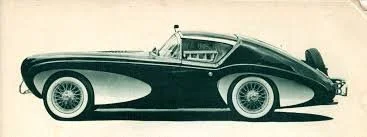
In 1968, New York real estate developer and certifiable car guy, Peter Kalikow, teamed up with Alfred Momo, who once managed Briggs Cunningham’s race team, and was now a Jaguar distributor. Together formed the Momo Corporation in order to make this exotic GT coupe. They hired American designer Gene Garfinkle of the Raymond Lowey Studio in New York to design the Mirage’s muscularly elegant shape. But in order to give the car proper cred in the world of automotive finery they decided the car needed to be built in Italy. The chassis was designed by a moonlighting Maserati engineer named Giulio Alfieri, and fabricated by the well-known Formula Junior designer, Vittorio Stranguelli. Meanwhile Carrozzeria Frua in Turin was called on to produce the bodies. For power, however, the only logical choice was Chevrolet’s marvelous 350 cubic inch LT-1 V8 that pumped out 300 highly reliable horspower. The final assembly was done stateside in Queens, New York.

The production ready Mirage made its debut at the 1972 New York International Auto Show where the sumtous coupe created guite a stir. The plan was to sell 25 of them at $12,000 a piece, with plans for another 250 the following year. Italy, however, was a turbulent place in the early 1970s. Labor unrest, materials shortages and rampant inflation caused the expected production cost of $7650 to baloon over $20,000. With their business plan shattered, Kalikow and Momo were forced to abandon their dream.

Five cars are known to have been completed, with a 6th left in Turin unfinished. This car was thought to have later been completed by the carrozzeria and sold. Three of the finished cars are owned by Peter Kalikow, one of which has been restored to concours condition. A forth Mirage was purchased by General Motors at the direction to design chief, Bill Mitchell - a man who knows a beautiful design when he sees one. The fifth was destroyed in a fire. An additional 3 chassis are also said to have been completed by Stranguelli. Their fate, along with that of the unfinished car, remains a mirage.

Copyright@2023 by Mal Pearson

The Flying Mizar

The Flying Mizar

In the early 1970s avionics entrepreneurs, Henry Smolinski and Hal Blake created Advanced Vehicle Engineers (AVE) to build a flying car. They called it the Mizar, named after one of the twin stars in the Big Dipper. Their concept was similar to Convair Corporation’s ConvAircar of the late 1940s, combining airplane and automobile units that could be attached or detached at the airport. In the case of the AVE Mizar, it was the union of a Cessna 337 Skymaster and a 1971 Ford Pinto.

Read More

El Tiburon Roadster (aka The Shark)

The 1962 El Tiburon Roadster (The Shark) was created by Henry Covington, an engineer at American Fibre Craft of Cupertino, CA. Most fiberglass sportscars of the day were Volkswagen-powered. But Sharks were motivated by the 845cc OHC engine used in the Renault Dauphine Gordini. This made them a bit less reliable than the Dub-based cars, but considerably more interesting.

While the smooth road hugging shape and extraordinarily advanced underbody ground effects are more reminiscent of a catfish than a shark, naming it after the latter rather than the was probably the smarter marketing move. Even so, only about two dozen of this breed of Shark ever saw life on land.

The Guanci SSJ

The Guanci SSJ

The man behind the Guanci SSJ was John Guanci, a Chicago businessman and certified Car Guy. When in the mid-1970s Guanci surveyed the landscape of high performance cars, he decided that America could do a whole lot better. Even though the 3rd generation Chevrolet Corvette was now 8 years old, a new mid-engined, rotary powered Vette had just been shelved. There was no replacement in the pipeline. The title of America’s Sports Car looked to be up for grabs.

Read More