Orphaned Longroofs Part 4
/The Duke’s domesticated side
Devoted to remembering the lost automakers - great and not so great - of the last seventy-five years
Dedicated to remembering the lost car makers, the orphaned brands that are such a rich and entertaining piece of American automobile history.

The Duke’s domesticated side

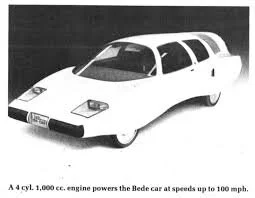
Bede Industries of Cleveland OH, created a propeler driven car in 1981. It used a pusher fan driven by a motorcycle engine. Bede claimed the car could do 100mph and get 120mpg. These numbers were calculated off engine output and weight, and did not take into account the propeller drive’s inefficiencies, which were considerable.
The car had other drawbacks. During supermarket parking lot maneuvers, empty carts would be blown into the next county… not to mention the occasional old lady with a walker. And passing a bicyclist on the road in a Bede could have dire consequences for the rider.
Only one Bede was ever made, and it is not known to have survived. Old ladies with walkers everywhere are breathing a sigh of relief.

AACA Facebook page/BobCunningham
The late 1940s was the start of the Jet Age. Any connection a car could make to jet airplanes would be a big selling point. The Gates Convertible Coupe was built in Dayton, Ohio. While it wasn’t made of the exotic materials of the day like aluminum or fiberglass, it did look a bit like a wingless airplane - or maybe an airplane-less wing. Either way, since it used the same 22hp Austin engine found in the tiny American Bantam, the Gates might have had trouble achieving takeoff velocity. Not much is known about what else lay beneath the futuristic-looking skin, except supposedly it had a set of hydraulic jacks that promised to raise one or all wheels at the touch of a button. Gates produced but one car, and it did not survive time.

AACA Facebook pager/David Rodgers
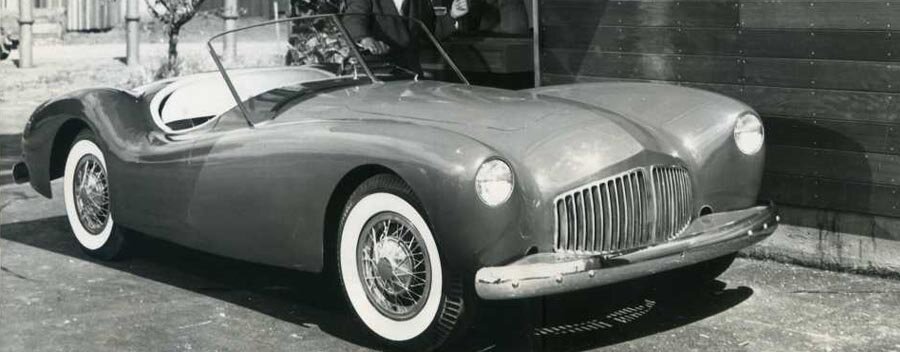
The Ronco Roadster was the creation of Bunny Ronco, whose day job was engineer for Mac Trucks. In his spare time it seems that Buddy’s mind lingered on smaller, lighter things than trucks. After the war, he scoured local junk yards looking for parts to build a sports car of his own design. It took nearly four years but Buddy eventually crafted his finds into a nifty little roadster. The sleek body was formed out of two pairs of Nash 400 rear fenders, artfully welded to a surplus aircraft drinking water tank. The car was supported by a 4-wheel independent suspension, which was quite advanced for the day. It is also said to have used a salvaged Volkswagen engine and transmission. This raises questions, however, since VWs didn’t appear on these shores much before the early 50s. If the 1949 Ronco was indeed Dub-powered, that would suggest it received an engine swap somewhere along the way.
And whatever that way was will remain a mystery, as Buddy only built one car, and it no longer exists.
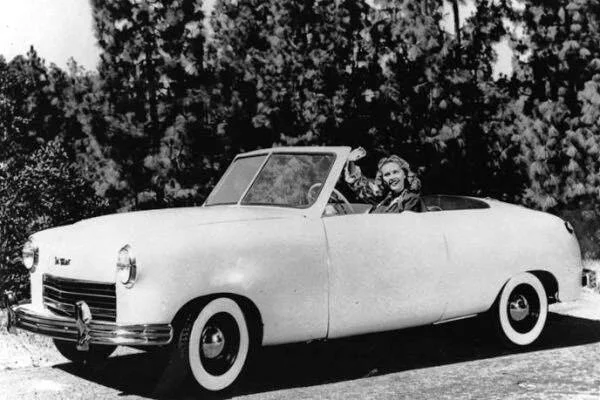
An optimistic motto of the 1950 Del Mar could have been, “If first you don’t succeed, try, try again.” A more pessimistic one might be, “Three strikes, you’re out.”
Read MoreMercury was a brand that was never quite sure of what it wanted to be. From its origins in 1937, it was conceived as a bigger more powerful Ford. Mercury indeed found initial success in the marketplace as a kind of super-Ford. In the late 1950s, the marque was pushed uptown to make room for the ill-fated Edsel, reshaping it into a cheaper alternative to Lincoln. That didn’t work out so well. In the 1960s it reverted back to being a stylish step up from the mainstream Ford brand and rose to new heights. Mercury lost its way again during the malaise of the 1970s. It soon became just a collection of rebadged Fords with not much to offer but a different showroom. And so it was for the Ford Motor Company’s middle child. There were moments when the brand’s star shown bright: The ’49 Merc is an automotive icon, and the ‘67 Cougar is one of the most beautiful cars ever made. Diehard Merc-o-philes would likely name a dozen more favorites (make mine a ’68 Park Lane, please). To the casual observer, however, most of its offerings are long forgotten. Until the end, Mercury never stopped searching for its place within the Ford "family of fine cars," looking for its role in the nebulous space that its siblings did not occupy. Mercury was an entity forever in search of an identity.
Read More
Cultural Appropriation, DeSoto style
The 1953 Chevrolet Corvette is often cited as America’s first mass produced sports car of the post-war era. It is true that the Corvette, now entering its 77th model year, is America’s longest running sports car. And at 1.75million sold and counting, it is the nation’s best seller by far. But it was not the first.
Here is a selection of America’s abundance of sports car makers that made their debut prior to the Corvette’s on June 30, 1953 - even if those many makers didn’t make very many cars.
Read More
1971 Pontiac Grand Safari Station Wagon (by Art Fitzpatrick)
I still remember the v-shaped hole in my childhood friend, Kenny Klein’s garage wall, after his 17-year old big sister forgot which peddle was the brake.

I think I may have discoverd the longest name in the history of the automobile: The 1957 Oldsmobile Golden Rocket Fiesta Super Eighty-Eight Station Wagon. Twenty-six syllables of cool.
Dedicated to remembering the lost carmakers, the orphan brands, that are such a rich part of the history of the American automobile